Emotional Needs in Marriage
Why Your Spouse Can’t Tell You What They Need (and How to Figure It Out)
Your spouse needs something you’re not giving them.
They probably can’t tell you what it is. They might not even know themselves. All they know is that something feels empty, and instead of telling you what they need, they show you what happens when they don’t get it.
They withdraw, get irritable, pick fights about stupid stuff, or quietly stop expecting anything from you at all. That’s not dysfunction. That’s an unmet emotional need making noise until someone pays attention.
“You can’t meet a need you don’t know exists.”

Why Can’t They Just Tell You What They Need?
Because most of us were never taught that emotional needs are real. We understand physical needs; nobody apologizes for being hungry. But emotional needs? A lot of us grew up in homes where those were treated as optional, or worse, as weakness.
An emotional need is a deep, recurring desire for a specific kind of relational experience, like feeling prioritized, respected, or safe, that shapes how loved or unloved a person feels. Everyone has them. The emotional needs are as real as the physical need for food and water. You just don’t die as quickly when they go unmet.
I grew up in a home where my parents showed up to every game and event. But in five years of being away college, my parents called me only once. Long distance calls cost money, but still… once. And that was to tell me my grandmother died.
I think they were trying to teach me to be independent. But what I actually learned was that my emotional need to feel important wasn’t important.
That need didn’t go away when I got married. It just moved to a new address. So now when I call Erin while I’m traveling and she’s too busy to talk, it cuts. Not because she’s doing something wrong, but because it touches a need that’s been tender for a long time.
“Your emotional needs didn’t start in your marriage. They started in your childhood. Your marriage is just where they surface.”
What Are the Core Emotional Needs in Marriage?
After working with over 1,000 couples through Renovation Marriage, I’ve identified four categories of emotional needs that show up in every relationship. Everyone has all of these needs to varying degrees. The question isn’t whether you have them. It’s which ones matter most to you.
Needs that make you feel connected: Attention (being truly listened to, not half-heard over a phone screen) and recreational companionship (sharing experiences together, not just managing logistics).
Needs that make you feel validated: Acceptance (being loved for who you are, flaws included), appreciation (being noticed for what you do), encouragement (being believed in), and respect (being treated as an equal, not talked down to).
Needs that make you feel secure: Comfort (being consoled when life is hard), security (knowing the relationship is solid even during conflict), and support (having someone share the load without being asked).
Needs that make you feel free: Autonomy (having space without guilt), importance (being prioritized over the schedule), affection (physical, non-sexual closeness), and sexual fulfillment (feeling wanted and desired).
Here’s the critical insight: your spouse’s top needs are probably different from yours. What fills your tank may barely register for them. That’s why guessing doesn’t work. You have to ask.
Do Men and Women Need Different Things?
Research suggests some general patterns. Gottman’s work found that men who stay emotionally engaged have dramatically stronger marriages. Men often rank sexual fulfillment and respect among their top needs, while women often prioritize security, attention, and affection.
But I’ve worked with plenty of wives whose top need is autonomy and husbands whose top need is comfort. Your spouse isn’t a category. The only way to know their specific needs is to ask them directly.
“Your spouse isn’t a gender stereotype. They’re a person with three needs that matter more than all the rest. Find out which three.”
What Happens When Emotional Needs Go Unmet?
Unmet emotional needs don’t sit quietly. They metastasize. An unmet emotional need is the gap between what a person requires to feel loved and what they’re actually receiving. Over time, that gap fills with resentment.
First comes disappointment, then frustration, then resentment, and eventually indifference. The person stops asking for what they need because asking has only produced more disappointment. They check out emotionally and start getting their needs met elsewhere: through work, friendships, hobbies, or in the worst cases, someone else’s attention.
Nearly every relational hurt I’ve helped couples work through traces back to one or more unmet emotional needs. The affair wasn’t primarily about sex; it was about feeling important. The blowup about the dishes wasn’t about housework; it was about feeling unsupported. When you learn to see conflict through the lens of emotional needs, the fights finally start making sense. When needs go unmet long enough, the resentment can feel like something much stronger. Here's what to do when it does.
“Every recurring fight in your marriage is an emotional need knocking on the door. The question is whether anyone will answer.”
A Simple Exercise You Can Do Tonight
Here’s what we do with every couple at our weekend intensive, and you can try it right now.
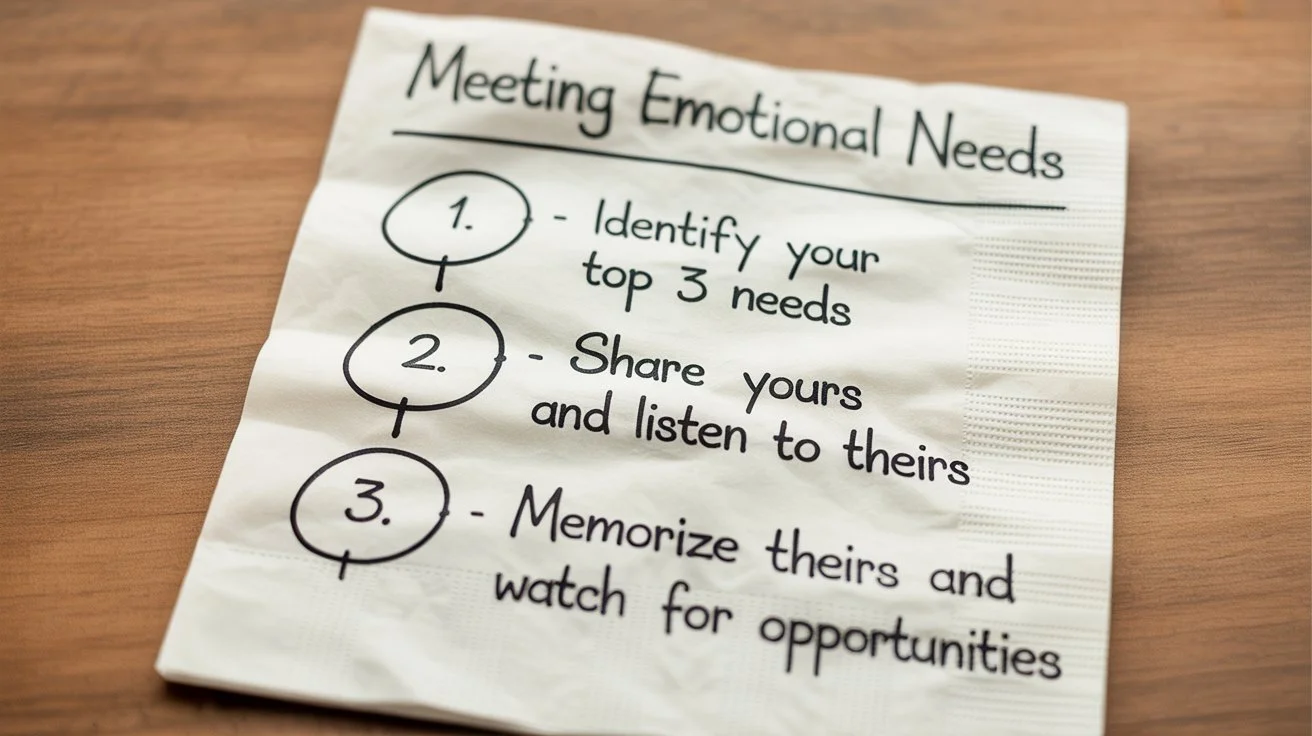
Step 1: Read through the list of emotional needs above. Without discussing it with your spouse, put a check next to the three that matter most to you. Limit it to three, because that’s all your spouse can realistically remember.
Step 2: Share your top three with your spouse. Let them share theirs. No arguing about whether the needs are being met. This step is about identification, not accusation.
Step 3: Memorize your spouse’s top three. Take the first letter of each and create an acronym or phrase that helps you remember. Then start watching for daily opportunities to meet those specific needs.
When you know your spouse’s top three emotional needs, two things change. You start to understand why certain things hurt them so deeply. And you start to see small, everyday moments where you can make them feel genuinely loved.
“Memorize three needs. Watch for them daily. That’s the whole strategy.”
Your Next Step
If this exercise sparked a real conversation, keep going. Learn the SHARE Model so you have a framework for talking about the hurts connected to these needs. And if the conversation reveals something deeper than a dinner table can hold, consider our weekend marriage retreat where we walk couples through this process with guided coaching.