How to Save Your Marriage: The Complete Guide for Couples in Crisis
Erin and I got married in 1994. We were totally in love and completely unprepared.
Little issues soon spiraled into big issues because we had no idea how to talk about any of it without it becoming a heated argument.
So we did something that honestly felt like admitting failure at the time: we went to see a marriage counselor. Early in our marriage. Like, embarrassingly early.
That counselor told me something I still remember. Each session he would tell me, “You’ve got to remember, building your marriage is like tending a garden. You’re never totally done.”
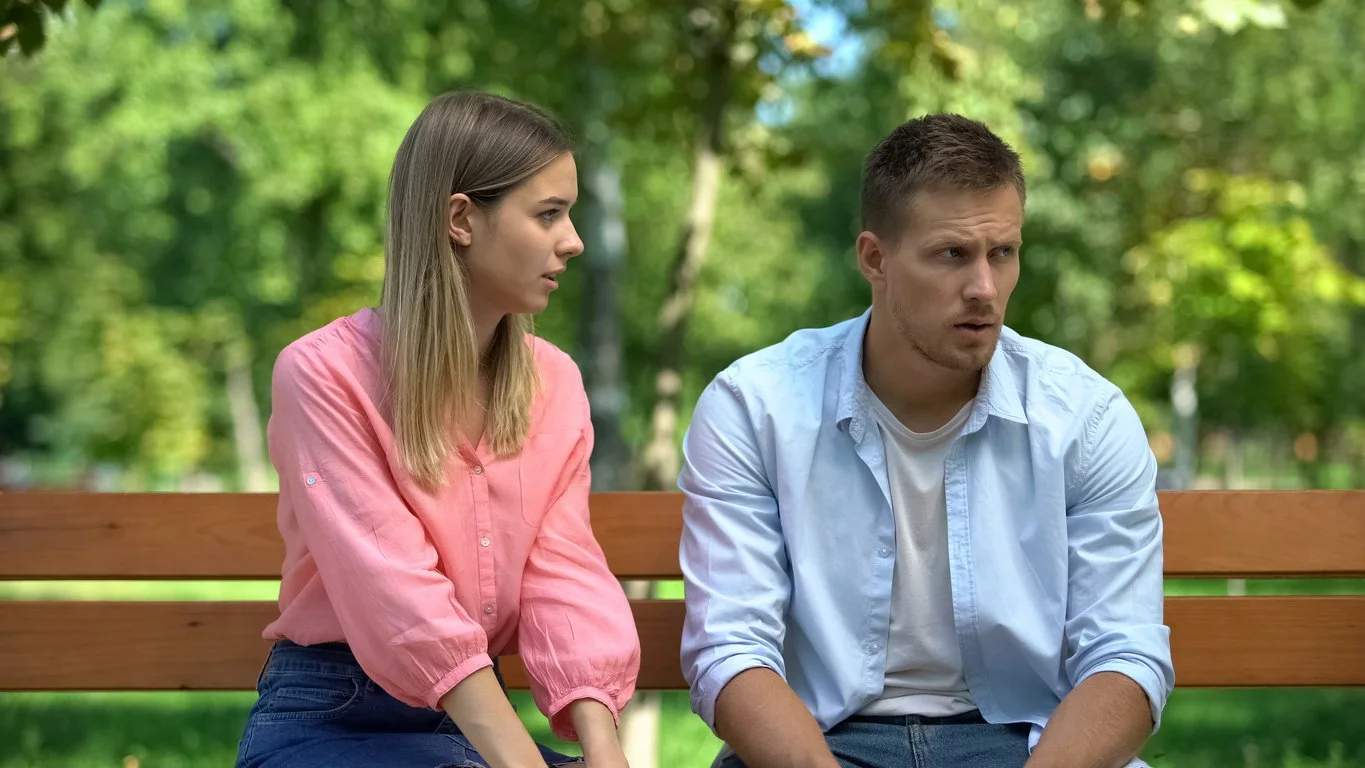
At the time, I thought he was wrong. I’d always believed a good marriage was supposed to be easy. Now I know it’s the most honest and hopeful thing anyone has ever told me about marriage. Because it means there’s always something you can do. There’s always a next step. And there’s hope in that.
Saving a marriage is the work of replacing the patterns that broke it with skills that repair it. Most marriages in crisis are not beyond repair. They're stuck, and stuck responds to the right kind of help. Stuck is fixable.
You’re not crazy. You’re not alone. And you’re not too far gone.
In one of the most-cited studies on why marriages end, researchers Lynn Gigy and Joan Kelly surveyed divorcing men and women through the California Divorce Mediation Project. Close to 80% gave the same reason: they had gradually grown apart and lost a sense of closeness. Most divorces happen not because of some dramatic explosion, but because couples gradually drifted apart and felt like roommates, where they lost the feeling of being loved and appreciated. They didn’t know how to find their way back to each other.
Most marriages don’t fail because of a lack of love, but a lack of tools.
Think about it: you spent months planning to get married, but how many hours did you spend learning how to actually be married? Most of us walked down the aisle with no training in the things that matter most. Stuff like how to fight without destroying each other. Or how to forgive when you’re still mad. Or how to stay emotionally connected when life is pulling you in two different directions.
The only marriage most of us saw up close was our parents’. For many of us, that’s the one thing we swore we’d never repeat.
I recently read a story about a dog that was unfortunately hit by a car. Its back legs were broken, but it was otherwise okay. In fact, soon after the accident, it gave birth to five healthy puppies. When the puppies began to learn to walk, an interesting thing happened. Even though their legs worked fine, they dragged their back legs behind them… just like their mother.
They just did what they saw their parent doing. It was all they knew.
In a similar way, some of us are still living out the deformities of the broken environment we grew up in. So how do we go about learning a different way to walk?
Why doesn’t traditional marriage counseling work for couples in crisis?
Marriage counseling helps a lot of couples, and I'd never talk anyone out of going. But the format has limits, and those limits have nothing to do with how good the counselor is.
1) One hour a week simply isn’t enough time to get beyond the surface on tough issues. By the time you sit down and explain what happened over the last week, time’s up. There’s little time to do meaningful work. It’s like trying to put out a house fire with a squirt gun, one squirt at a time.
2) The gap between sessions can be brutal. The challenges of real life don’t pause between counseling appointments. The same destructive patterns keep repeating and the issues stack up higher than you’re able to navigate during an hour with the counselor.
3) Sometimes the therapist becomes a referee instead of a coach. Weekly sessions can devolve into a moderated argument where both sides state their case and try to get the counselor to take their side. Couples end up talking about each other, rather than leaning how to talk with each other.
Now to be fair, for some couples, weekly sessions can work well. But couples who are in crisis often need something more concentrated.
Five evidence-based steps to start saving your marriage today
Here are five things you can do, starting now. These steps are backed by both research and our real-world experience of working with lots of couples who were right where you are.
Step 1: Stop the bleeding
Before you can heal anything, you have to stop making it worse. Renowned researcher Dr. John Gottman identified four destructive communication patterns he calls the “Four Horsemen of the Apocalypse”: criticism, contempt, defensiveness, and stonewalling. If any of those are consistently showing up in your conversations (and if you’re in crisis, I’d bet money they are), then they need to stop.
Criticism and defensiveness are fairly self explanatory. Contempt is the eye roll. It's the heavy sigh that seems to say “I can't believe I married someone this stupid.”
Stonewalling is avoiding talking about the issue and shutting down any conversation on the topic.
Practical step: Make a temporary truce. Agree that for the next two weeks, you’ll both stop intentionally doing what you know hurts the other. No name-calling, silent treatment, or using the threat of divorce as a weapon. You don’t have to solve anything yet, but you do have to stop making it worse.
You can’t renovate a house while someone is still swinging the wrecking ball.
Step 2: Look beneath the anger
Anger is almost always a secondary emotion. Picture an iceberg. Anger is the part everyone can see above the water. But underneath the surface? That’s where the real primary emotions are. Stuff like fear. Loneliness. Embarrassment. Helplessness.
Here’s why that’s helpful to know. When your spouse comes unglued because you forgot to pick up milk at the grocery store, their reaction is probably not just about the milk. They’re angry because forgetting the milk felt to them like “I don’t matter to you.” So the anger is what comes to the surface, while the other emotions stay buried.
Practical step: The next time you feel your anger rising to the surface, pause and ask yourself: What am I actually feeling right now besides angry? Do I feel anxious? Rejected? Disrespected? Then name your real emotion out loud. Tell your partner what you’re feeling. The conversation that follows may not be easy, but it will be real.
Every angry conversation is really a hurt conversation in disguise.
Step 3: Learn to communicate about hurt in a way that heals
Most couples know they need to communicate better. But giving someone the advice to “communicate better” is about as helpful as telling someone who’s drowning to “swim better.” The challenge isn’t due to a lack of effort. The problem is you’re communicating in ways that make things worse.
Gottman’s research found that 69% of marital conflicts are “perpetual.” In other words, they will never fully resolve. So we’re never going to completely eliminate conflict, but that’s okay. The goal with conflict is actually to learn to talk through pain without causing more of it.
The SHARE Model is a five-step process that gives couples a structured, safe way to bring up an emotional hurt and actually take steps toward healing. The process involves one partner sharing what happened and how it impacted them, the other listening deeply and empathizing, and both partners working together toward genuine repentance and forgiveness.
Here’s the full breakdown of the SHARE Model. The core idea to know is: when you have a reliable framework for talking about hard things, you can stop avoiding the hard things. Because avoiding hard things is how marriages die.
Practical step: Start with this sentence: “When [this specific thing] happened, I felt [this specific emotion].” Avoid using phrases like “you always” or “you never.” Just name one thing that happened and one thing you feel as a result. That’s where healing begins. Before you can talk about hurt, you need to understand the emotional need underneath it. Here's how to find it.
Talking constructively during conflict is a skill that can be learned.
Step 4: Rebuild emotional connection through daily choices
Gottman’s lab at the University of Washington discovered something remarkable. He found that couples in thriving marriages responded to each other’s small bids for attention about 86% of the time. The couples who eventually divorced, however, responded only about 33% of the time.
A “bid” is your spouse saying, “Hey, look at this funny thing the dog did.” Responding to it is you actually looking up from your phone. A bid is your partner sighing heavily while doing dishes. Responding to it is you asking, “Tough day?” instead of pretending you didn’t hear.
Marriages live or die in those tiny moments when we respond - or don’t - to our partner’s bid for connection.
Practical step: For the next seven days, try the 6-Second Kiss. (Yes, it’s awkward at first.) Before one of you leaves the house each day, kiss for a full six seconds. It’s long enough to actually feel something, and short enough that nobody’s late for work.
Nobody ever drifted apart in a single afternoon. They drifted in a thousand small moments of turning away. The good news? You can turn it back around the same way.
Step 5: Get the right kind of help at the right time
If your marriage is in crisis - and by crisis I mean one of you is considering leaving, trust has been shattered, or you’ve been stuck in destructive patterns for months or years - then reading a blog article is not going to fix it.
You need concentrated, guided intervention. Especially if you hope to rebuild trust. So I’d encourage you to think about something most couples have never considered: a marriage intensive.
| Weekly counseling | Marriage intensive | |
|---|---|---|
| Time together | About 60 minutes a week | 9 sessions in one weekend |
| How long it takes | Months, often longer | One weekend, then follow-up |
| The gap between sessions | 6 days for old patterns to resurface | No gap to interrupt the work |
| Best fit | Steady work on a stable marriage | Active crisis, or progress that has stalled |
Here's the full side-by-side on a marriage intensive compared to weekly counseling.
At Renovation Marriage, about 75% of the couples who attend are in some level of crisis. Many have been told by therapists or friends that it’s too late. Some are attending as a last-ditch effort before filing divorce papers. And yet, time after time, we see couples who walked in on Friday evening barely speaking, leave on Sunday afternoon holding hands, reconnected and with tools and a plan for the future. In fact, 98% of the couples who attend our marriage intensive say that it was helpful for their marriage.
Practical step: If you feel like you’ve tried everything, consider attending a marriage intensive. Look for a program that combines evidence-based clinical frameworks with genuine compassion. A good marriage intensive should give you practical tools you can keep using when you get back home, rather than a motivational talk that fades within days. Here’s what separates the weekends that last from the ones that fade.
A weekend won’t fix every problem in your marriage. But it can change the trajectory of your marriage in a way that months of weekly sessions often can’t.
Can you save your marriage when nothing seems to be growing?
For years when I thought about what that counselor told me about marriage being like a garden, I thought of it as a warning. Like you’re never done and the work is exhausting. It sounded like a life sentence of pulling weeds.
But here’s what I’ve come to understand after 31 years, working with over a thousand couples, and watching marriages everyone was sure were over come back to life: the garden metaphor is actually a promise.
The fact that marriage is like a garden means there’s always the hope of a new season. The soil is still good even when the surface looks barren. Weeds are normal - every garden has them - and pulling them is a positive sign that you’re willing to do the work.
Even a neglected garden can bloom again. But someone has to decide to pick up the shovel.
Your marriage may feel like it’s in winter right now. The ground is hard and nothing seems to be growing. But winter is not the end of the story. It’s just a season. And the couples who make it are the ones who keep tending the garden, even when they can’t see anything growing.
So here’s my question for you: are you willing to pick up the shovel?
Can you save your marriage if only one of you is trying?
If your marriage is in crisis: Look into a marriage intensive. Renovation Marriage runs affordable weekend marriage retreats nationwide, and we’d be honored to walk through this season with you and your spouse. If travel is out of reach, we run the same nine sessions online, and here’s info about whether an online marriage retreat actually works.
If you’re drifting apart: Start the 6-Second Kiss this week and try the sentence framework from Step 3 (“When that happened, I felt this.”) You’d be amazed what one week of new habits can begin.
If you want to go deeper: Subscribe to the Renovation Marriage blog. Almost every week, we publish practical, research-backed advice for couples at every stage.
You fell in love by accident. You’ll stay in love on purpose.
Can my marriage be saved?
Most marriages in crisis can be saved when both spouses are willing to learn new skills. Research on divorce points to gradual drift and lost connection as the most common cause, more often than a single catastrophic event. Drift is a skills problem, and skills can be taught. 98% of couples who attend our Renovation Marriage weekend report significant progress.
Is it too late to save my marriage?
A marriage is rarely too far gone to save, even after separation or a filed divorce petition. About 75% of couples who attend a Renovation Marriage weekend arrive in some level of crisis, and many have already been told by friends or a therapist that their marriage is finished. Many of those marriages recover.
How do I save my marriage if my spouse won't try?
One spouse can start the work alone. Changing your own reactions, stopping the behaviors that escalate conflict, and getting your own counseling or coaching often shifts the dynamic enough that a reluctant spouse re-engages. The rebuild needs both of you eventually, but it only takes one to change the pattern first.
How long does it take to save a marriage?
Saving a marriage has no fixed timeline, and the pace depends as much on format as on how broken things feel. Weekly counseling gives a couple about 60 minutes a week, spread across months. A marriage intensive compresses 9 sessions into a single weekend, which is why couples in crisis often see movement sooner in a concentrated format.